Quick answer: what should an India medical-treatment budget include?
For international patients, the safest working budget is not one national average. Start with a case-specific hospital estimate after medical report review, then add the travel and follow-up costs that sit outside the hospital invoice. If you only compare a package headline, you can miss implants, ICU days, medicines, extra tests, changed flights, rehabilitation, or complications.
Use Virello’s procedure cost pages for planning ranges, then replace any range with a written estimate for the exact patient, hospital branch, room, treatment scope, and expected stay.
| Budget layer | What to include | When it becomes reliable |
|---|---|---|
| Hospital estimate | Procedure, surgeon, anesthesia, room, tests, medicines, devices, ICU, nursing, early reviews | After the hospital reviews current reports and states its assumptions |
| Procedure-specific add-ons | Implants, lenses, grafts, blood products, advanced imaging, rehabilitation, second-stage treatment | After the treating team confirms the exact pathway |
| Travel and stay | Flights, visa, accommodation, local transport, interpreter, food, companion, accessibility | After dates, city, hospital branch, and recovery window are known |
| Contingency | Extended stay, changed flights, extra tests, readmission, home follow-up, insurance gaps | Before payment, because these items are often excluded from package totals |
| High-intent cost page to use next | Why it matters |
|---|---|
| Treatment costs in India | Start with procedure-level ranges and quote variables. |
| Treatment costs by country | Compare India, Turkey, and Thailand pages where available. |
| Treatment quote support | Turn reports into an itemized estimate request. |
Why one India treatment price is misleading
The same procedure name can describe different clinical situations. The confirmed diagnosis, complexity, treating team, exact hospital branch, room category, expected stay, medicines, devices, intensive care, rehabilitation, and complications can all affect the amount billed. Virello Health’s treatment-quote guidance therefore treats reports, assumptions, inclusions, and exclusions as essential to a usable estimate.
Online figures often omit the context needed to decide whether two numbers are comparable. A lower figure may exclude an implant, professional fee, intensive care, medicine, or follow-up that another estimate includes. It may apply to a different patient profile or have been published in another currency at an earlier date.
This guide intentionally does not give an India-wide low-to-high price range. The evidence pack did not establish a regulator-grade dataset that compares equivalent cases across hospitals. Only a hospital’s current written estimate after clinical review can apply to an individual.
Separate the budget into four layers
A clear worksheet separates costs that are often mixed together.
| Budget layer | Examples | Who confirms it |
|---|---|---|
| Clinical estimate | Hospital, professionals, procedure, anesthesia, tests, room, medicines, devices, intensive care, rehabilitation | Treating hospital after clinical review |
| Medical-travel support | Coordinator services, interpreter, medical transfers, appointment logistics | Facilitator in writing |
| Trip and stay | Flights, visa, accommodation, food, local transport, companion, accessibility | Traveller, authorities, airlines, and suppliers |
| Contingency and follow-up | Extended stay, changed flights, extra tests, complications, home follow-up, rehabilitation | Hospital, insurer, home clinician, and traveller |
Keep the layers separate even when a seller calls the whole amount a “package.” This makes omissions visible and prevents a hotel or transfer inclusion from making an incomplete clinical estimate look more comprehensive.
Build the clinical estimate line by line
Ask the hospital to issue the estimate on its letterhead or approved digital system and identify the exact branch. The document should connect the amount to the case information reviewed.
Record:
- Proposed procedure or care pathway.
- Diagnosis and assumptions used for estimating.
- Issuing hospital, branch, and department.
- Currency, issue date, and estimate-validity period.
- Treating professional fees and hospital charges.
- Anesthesia and operating- or procedure-room charges where relevant.
- Room category and assumed hospital days.
- Pre-procedure and post-procedure tests included.
- Medicines and consumables included.
- Implant, prosthesis, device, or blood-product assumptions.
- Intensive-care assumptions.
- Rehabilitation or physiotherapy included.
- Follow-up consultations or remote review included.
- Taxes and administrative charges included.
- Deposit, payment, cancellation, refund, and invoice terms.
Then ask for a separate exclusion list. Common questions concern additional investigations, changed procedures, comorbidities, complications, longer hospital or intensive-care stays, repeat operations, higher-cost devices, take-home medicines, rehabilitation, and care after returning home. These are questions to clarify; they are not predictions about what any patient will need.
Add the non-medical trip budget
The hospital estimate is only one part of the total. Build the trip budget using current supplier quotes rather than an old blog figure.
Include:
- Passport or document costs where applicable.
- Current visa application costs and associated travel to a mission, if required.
- International and domestic flights.
- Flexible-change or cancellation terms.
- Airline medical-clearance paperwork where applicable.
- Airport assistance and accessible transfers.
- Accommodation before admission and after discharge.
- Accommodation for a companion.
- Local transport to appointments and follow-up.
- Meals, drinking water, laundry, and communications.
- Interpreter support not included by the hospital.
- Mobility equipment or accessible-room needs.
- Visa extension or changed-trip costs if the stay is longer.
- Return-home transport and local follow-up.
India’s official e-Visa portal lists medical categories, but rules, eligibility, fees, and document requirements can change. The same page currently contains conflicting wording about duration and entries, so do not budget from a fixed duration copied elsewhere. Confirm the applicable requirements and issued authorization through official channels.
Check insurance before assuming reimbursement
Travel insurance, travel health insurance, domestic health insurance, and medical-evacuation insurance cover different events. Coverage depends on policy wording, exclusions, preauthorization, destination, planned treatment, and pre-existing-condition terms.
The CDC travel-insurance guidance notes that overseas care may require payment up front and later reimbursement. It advises travellers to understand what their policy covers, whether preauthorization is needed, and how claims are made.
Ask the insurer in writing:
- Is planned treatment abroad covered or excluded?
- Are complications of planned treatment covered?
- Are pre-existing conditions excluded?
- Is preauthorization required?
- Is the proposed hospital recognized by the policy?
- Does the insurer pay the hospital directly or reimburse later?
- Which currencies, documents, itemized bills, and clinical records are required?
- Are extended accommodation, changed flights, or a companion covered?
- What triggers medical evacuation or repatriation?
- Which emergency contact should be used from India?
Do not treat verbal reassurance as a reimbursement guarantee. Keep policies, authorizations, itemized invoices, receipts, discharge records, and payment confirmations.
Allow for payment and currency friction
A budget can change even when the hospital estimate does not. Card conversion rates, transfer fees, correspondent-bank charges, card limits, cash-advance fees, and refund conversion can affect the final amount paid.
Before transferring money, confirm:
- Account holder and bank details through a verified hospital channel.
- Whether payment goes to the hospital, facilitator, or another party.
- Accepted currencies and methods.
- Deposit amount and due date.
- Card or bank-transfer limits.
- Who bears intermediary bank charges.
- How overpayments and refunds are handled.
- Currency used for a refund.
- How an invoice and receipt will be issued.
- Whom to contact if the treatment plan changes.
Never send money to an unverified personal account. Independently confirm changed bank details using a known contact route. This is a general fraud-prevention step, not a statement about any particular hospital or facilitator.
Compare written estimates on identical assumptions
Put estimates side by side only after aligning the scenario.
| Field | Option A | Option B |
|---|---|---|
| Hospital branch and department | ||
| Clinical scenario reviewed | ||
| Procedure or pathway | ||
| Room and hospital-stay assumption | ||
| Professional and anesthesia fees | ||
| Tests and imaging | ||
| Medicines and consumables | ||
| Implant or device specification | ||
| Intensive-care assumption | ||
| Rehabilitation and follow-up | ||
| Explicit exclusions | ||
| Currency, date, and validity | ||
| Deposit and refund terms |
If one estimate is unclear, ask for clarification before concluding that it costs less. The CDC medical-tourism guidance also advises patients to understand what a package covers, how follow-up is managed, and what arrangements exist for complications.
Price should not be the only comparison. The exact team, facility, clinical fit, continuity, and complication plan matter. Accreditation is a useful process signal but does not guarantee an outcome.
Use three budget scenarios
A single total can create false precision. Use three planning scenarios without pretending to predict the clinical course.
Planned pathway
Use the hospital’s written assumptions plus confirmed flights, accommodation, transfers, companion costs, and follow-up. Label every figure with its date and source.
Extended stay
Add flexible accommodation, meals, local transport, communications, changed-flight fees, companion expenses, and additional follow-up. Ask the hospital what events could alter the expected stay without asking it to predict an individual outcome.
Complication contingency
Check which clinical costs are excluded, how the hospital bills additional care, what insurance may cover, how emergency funds can be accessed, and how home-clinician or evacuation support would work. The contingency is financial preparation, not an estimate that a complication will occur.
Keep emergency contacts and payment-access information with the companion. Do not rely on the website as an emergency service.
Total-trip budget worksheet
Create one line for each amount and retain the source.
| Item | Quoted amount and currency | Quote date | Included or excluded | Who confirmed it | Contingency needed |
|---|---|---|---|---|---|
| Hospital estimate | |||||
| Professional fees | |||||
| Device or implant | |||||
| Medicines and tests | |||||
| Rehabilitation | |||||
| Flights | |||||
| Accommodation | |||||
| Companion | |||||
| Local transport | |||||
| Insurance | |||||
| Follow-up at home | |||||
| Extended-stay reserve |
Update the worksheet when the clinical plan changes. Preserve the original currency. If you add a converted value, record the dated exchange-rate source and retain both amounts.
Questions to resolve before committing funds
- Has a qualified clinician reviewed the relevant reports?
- Does the estimate identify the exact hospital and clinical assumptions?
- Are inclusions and exclusions itemized?
- Are the two options genuinely comparable?
- Are travel, companion, and follow-up costs separate?
- Has the insurer answered planned-care and complication questions in writing?
- Are payment details verified?
- Is there a plan for an extended stay?
- Who updates the estimate after in-person assessment?
- Who provides the final itemized bill and medical records?
You can request a written treatment estimate through Virello Health after the relevant reports are reviewed. The coordinator can help clarify assumptions and logistics; the hospital determines the care plan and issues the applicable estimate.
How to manage changes after the first plan
Treat the first budget and estimate as a dated working document. Medical information, appointment availability, official rules, supplier terms, and the patient’s practical needs can change. Keep a change log rather than replacing the earlier version, because the reason for a change may matter to the clinician, hospital, insurer, authority, or family member reviewing the journey.
For every update, record:
- Which budget layer and amount are affected.
- What changed and who reported it.
- The date and the source document or official page.
- Whether the change affects clinical suitability, timing, cost, travel, accommodation, or follow-up.
- Which decision owner must approve or confirm the next step.
- Whether a revised opinion, estimate, authorization, booking, or consent document is required.
- What remains uncertain and when it will be rechecked.
A coordinator can organize budget updates but cannot explain the medical reason for a changed pathway. Ask the treating specialist for that explanation and the hospital for a revised estimate. Insurance, visa, airline, accommodation, and payment-provider changes must come from those sources. If the patient’s condition changes, clinical reassessment comes before spreadsheet revision.
Before committing funds, compare the current clinical plan with the hospital estimate, insurer response, payment instructions, accommodation, flights, and contingency. Confirm that dates, branch, currency, stay, room, devices, and other assumptions match. A hospital estimate does not prove insurance reimbursement, and an insurer response does not guarantee the hospital’s final bill.
Keep a concise budget dashboard showing confirmed, provisional, and unconfirmed lines; original currencies; issuers; dates; deposits; cancellation terms; committed amounts; contingency; and the next update owner. Keep clinical evidence in approved systems and avoid placing diagnoses or identifiers in a budgeting sheet that does not require them.
If a change creates possible urgency or worsening symptoms, stop the administrative workflow and contact local emergency services or a licensed clinician. The safest logistical plan is always secondary to timely clinical care.
Give every budget line an owner and status
A budget becomes easier to maintain when each line shows who can confirm it and how reliable it currently is. Use three simple statuses:
- Confirmed: supported by a current written hospital estimate, insurer response, official fee, or supplier booking for the current plan.
- Provisional: based on a stated assumption that still depends on clinical review, dates, availability, or another decision.
- Unconfirmed: no responsible issuer has supplied the amount or terms.
Do not convert “unconfirmed” into a guessed average merely to complete the spreadsheet. Instead, identify whether the hospital finance team, treating clinician, insurer, airline, accommodation provider, coordinator, or home-care provider owns the next answer.
Keep clinical and non-clinical changes linked. If the treating team revises the pathway, mark every affected estimate, stay, transport, rehabilitation, and follow-up line for review. This prevents an old total from surviving after the assumptions behind it have changed.
Review the dashboard with the family member responsible for payments so provisional amounts are never mistaken for available funds or confirmed charges.
Continue planning
- Compare inclusions and exclusions with the India treatment-package guide.
- Place the budget inside the full journey using the medical tourism in India planning checklist.
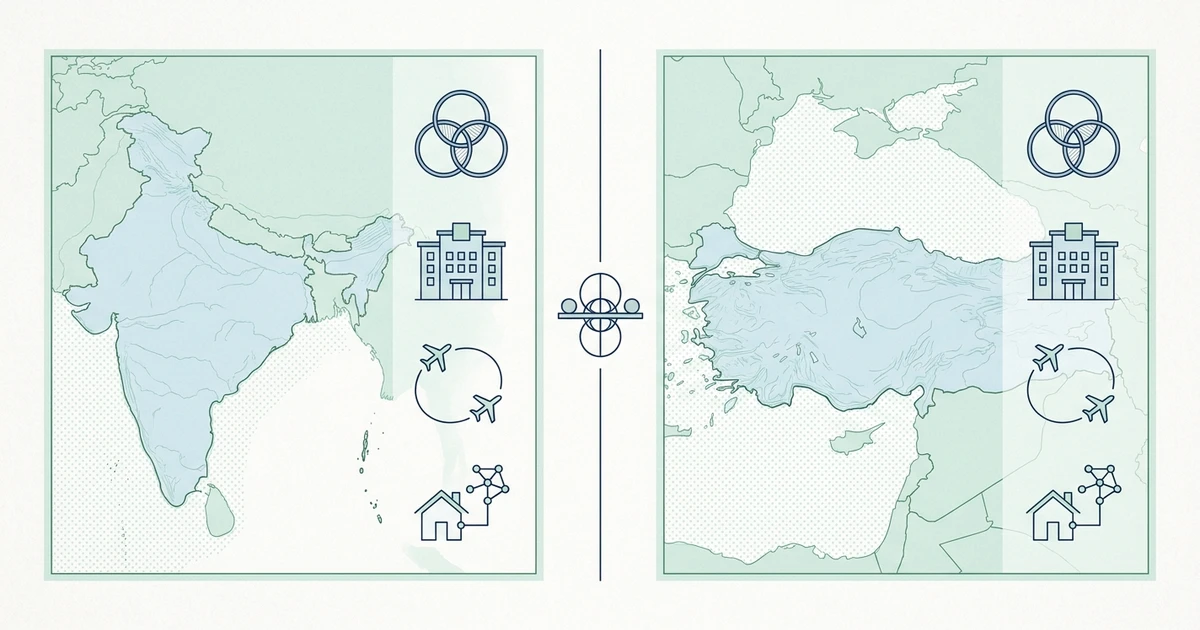
- Compare like-for-like destination costs with the India vs Türkiye treatment guide.