Plan follow-up before the return journey
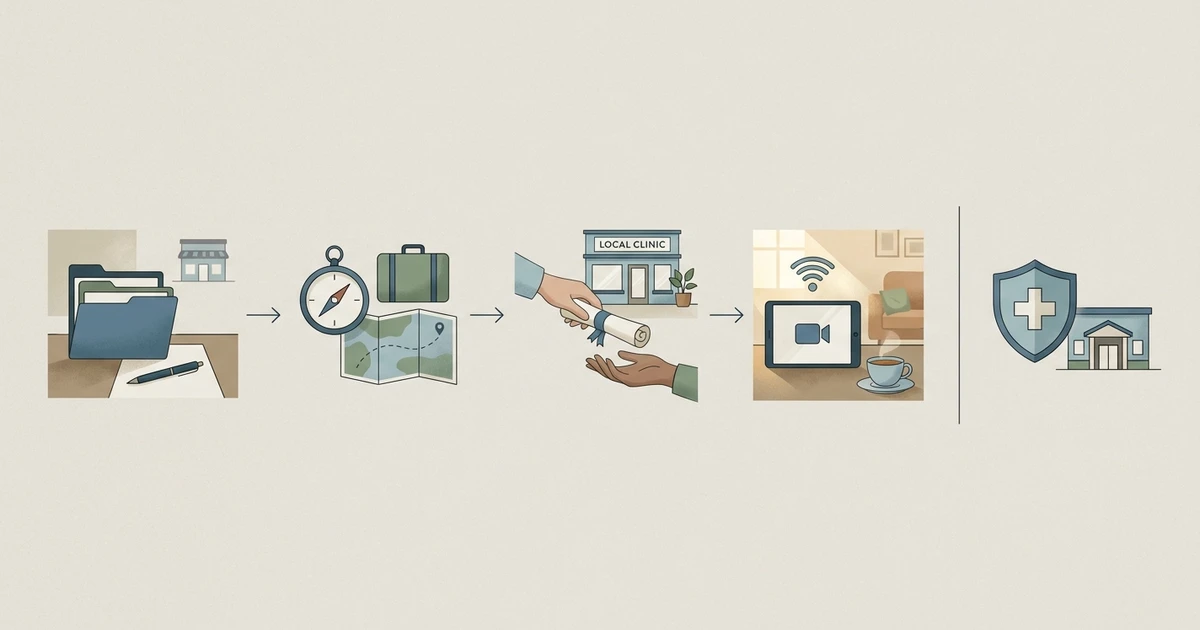
Follow-up care after treatment in India should not begin after you land home. It should begin before discharge, while the treating team, hospital records desk, billing team, coordinator, and family are still close to the same information.
The CDC advises medical tourists to request overseas medical records in English and provide them to healthcare professionals they see later for follow-up. It also advises patients to disclose travel history and treatments received abroad (CDC medical tourism guidance, accessed 2026-09-24).
The core plan is simple:
- Collect the right records.
- Know who owns each follow-up question.
- Share the documents with a local clinician.
- Schedule remote review when appropriate.
- Use local urgent care for urgent or worsening concerns.
Virello Health can help coordinate records, delayed results, appointment timing, and communication routes. It cannot replace the treating team, local clinician, or emergency services.
Before discharge, collect the records that travel with you
Ask for the documents before the patient leaves the hospital. Some documents may take time, especially pathology, cultures, final imaging, itemised bills, or translated copies.
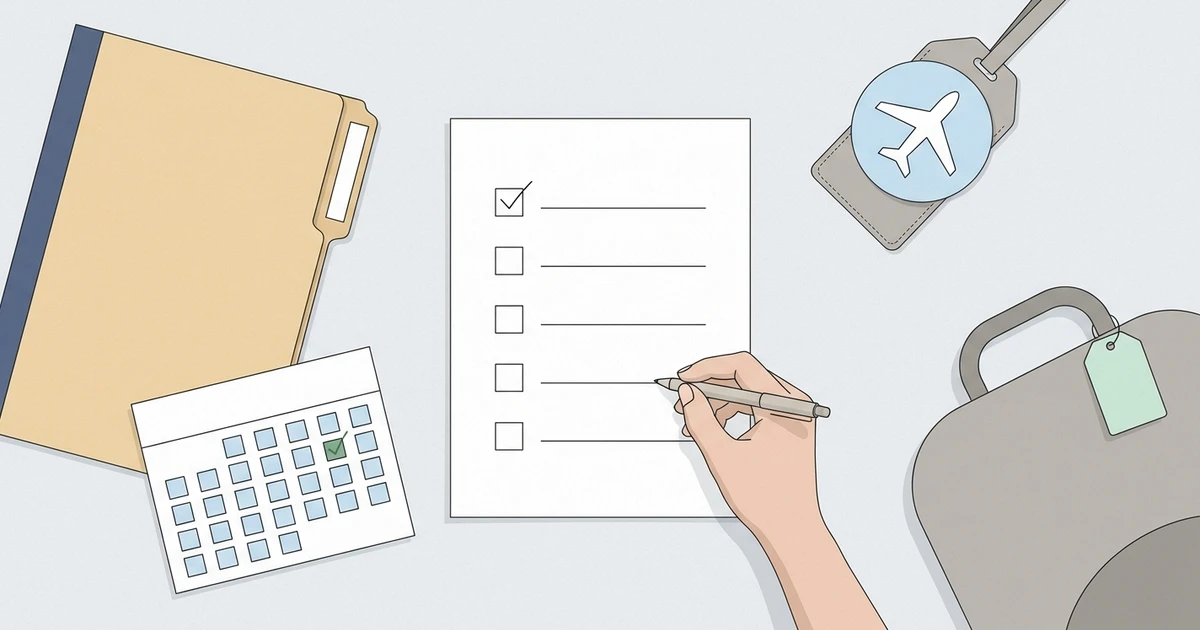
Start with this record set:
- Discharge summary.
- Diagnosis and procedure details.
- Operative or procedure note when applicable.
- Medication list with dose, timing, duration, and stop or review instructions.
- Lab reports.
- Imaging reports and image files when available.
- Pathology or biopsy reports when relevant.
- Implant, device, stent, lens, graft, prosthesis, or serial details when relevant.
- Prescription for discharge medicines.
- Follow-up appointment plan.
- Restrictions, activity instructions, diet instructions, wound or device instructions when issued by the clinical team.
- Itemised bill and payment receipts.
- Emergency or after-hours contact route from the treating facility, if provided.
The American College of Surgeons recommends that patients receiving treatment abroad obtain a complete set of medical records before returning home so details are available to physicians and surgeons at home, and that follow-up care at home be organized before travel whenever possible (ACS medical and surgical tourism statement, accessed 2026-09-24).
Do not assume that a coordinator can recreate missing records later. Ask while the hospital team is still available.
Before flying home, clarify the follow-up owner
Different questions belong to different owners. Keep the owners separate so messages do not get lost.
| Follow-up question | Primary owner | What to keep |
|---|---|---|
| Recovery restrictions | Treating clinician | Written discharge instructions |
| Travel-home fitness | Treating clinician and travel provider process | Clinical note or airline form if needed |
| Medication changes | Treating clinician or local clinician | Updated prescription and reason |
| Wound, device, or symptom concern | Local licensed clinician or emergency care when urgent | Local assessment record |
| Pending pathology or lab result | Hospital department or coordinator | Expected date and contact route |
| Remote appointment | Hospital team or coordinator | Date, time zone, link or contact method |
| Local tests after return | Treating clinician and local clinician | Test request and sharing plan |
| Billing or package question | Hospital billing team or coordinator | Itemised bill and written explanation |
Treating clinicians, not a facilitator, should set follow-up timing, travel-home restrictions, medication changes, and recovery instructions. If the patient may not be fit to fly or needs special assistance, ask the treating team and the airline or travel provider what documents are required.
Use the before booking flights guide when the return journey depends on clinician input, airline forms, or hospital timing.
In the first week at home, share records locally
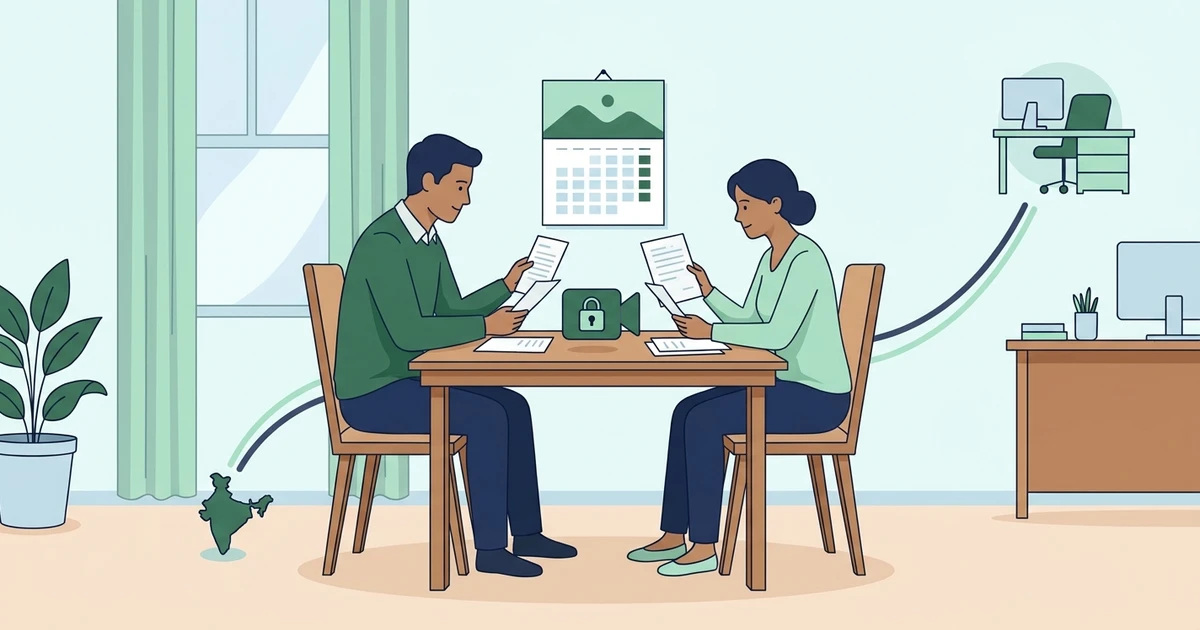
Once home, send the discharge documents to the clinician who will help locally. This could be the patient’s primary doctor, specialist, surgeon, oncologist, cardiologist, rehabilitation clinician, or another licensed professional depending on the procedure.
The CDC advises medical tourists to provide overseas medical records to healthcare professionals they see later and to disclose medical care received during travel (CDC medical tourism guidance, accessed 2026-09-24).
Ask the local clinician:
- Which records do you need first?
- Are any medicines unclear or unavailable locally?
- Are any tests or visits needed near home?
- Which symptoms or changes should be handled locally without waiting for the overseas team?
- How should updates from the Indian treating team be shared?
If symptoms are urgent, worsening, or concerning, contact local emergency services or a licensed clinician immediately. Do not wait for an overseas reply to protect a package, appointment slot, or travel plan.
Use remote follow-up for the right questions
Remote follow-up can help with planned review, report interpretation by the treating team, medication clarification, wound-photo review when the clinician requests it, and next-appointment planning. It cannot do everything.
Virello’s post-discharge follow-up support explains that all follow-up cannot happen online. Some concerns may require examination, tests, imaging, or emergency care.
Remote follow-up is more useful when:
- The question is expected and planned.
- The treating team requested an update.
- The records and images are clear.
- The patient also has a local clinician if physical review is needed.
- Time zones and response expectations are clear.
- The team has consent to communicate with caregivers or local clinicians.
Remote follow-up is weaker when the patient needs physical examination, urgent assessment, new imaging, medication monitoring, procedure-specific rehabilitation, or emergency care.
Plan for delayed results and missing documents
Some important documents may not be ready at discharge. Pathology, cultures, specialized imaging, implant details, revised bills, insurance paperwork, and translated documents can lag behind the travel schedule.
Before leaving India, ask:
- Which results are still pending?
- Who will review them?
- How will they be shared?
- Who explains the result to the patient?
- Should the home clinician receive a copy?
- What happens if the result changes the follow-up plan?
- Are translation, DICOM/image transfer, courier, or document fees separate?
Virello’s post-discharge support page describes help with discharge documents, images, pathology, prescriptions, updates, delayed-result review routes, and communication with a home clinician when consent and hospital workflow allow (Virello post-discharge follow-up support, accessed 2026-09-24).
This is coordination support. It is not a promise that every document will be instant, free, or clinically complete without hospital involvement.
Clarify which follow-up costs are included
Follow-up can create costs outside the original hospital estimate. The CDC notes that medical tourists should understand which services are included in the procedure cost and whether follow-up care is charged in addition to the base cost (CDC medical tourism guidance, accessed 2026-09-24).
Ask before discharge whether these are included, separate, or unavailable:
- In-person follow-up visit in India.
- Remote consultation after return.
- Local tests before remote review.
- Rehabilitation or physiotherapy.
- Discharge medicines.
- Additional prescriptions.
- Translation.
- DICOM or image file transfer.
- Courier.
- Local clinician visits at home.
- Complication care.
- Readmission.
Use the treatment package calculation guide when you need to understand which assumptions sat inside the package. Use the treatment longer than package guide if the recovery or stay may extend before return.
Where Virello fits after discharge
Virello Health can help make the follow-up plan easier to track. The support is practical and non-clinical:
- Collect a list of discharge documents to request.
- Help organize records for home-clinician handoff.
- Track pending results and who should explain them.
- Help schedule planned follow-up with the Indian team.
- Coordinate communication between the Indian treating team and a local clinician when consent and hospital workflow allow.
- Keep cost, translation, image-transfer, and document questions visible.
Virello cannot diagnose a new problem, provide emergency treatment, decide medication changes, set travel fitness, or replace the treating doctor or local clinician.
If you are still in India, talk with Virello about post-discharge follow-up support before discharge. If you are already home and unsure which document is missing, contact Virello Health and ask how to route the question.
A simple return-home checklist
Before discharge:
- Ask for the discharge summary, prescriptions, procedure notes, reports, images, bills, and follow-up plan.
- Ask what results are pending.
- Ask who should receive updates at home.
- Ask which follow-up costs are included.
Before flying:
- Confirm travel-related restrictions with the treating team.
- Keep medicines and records accessible.
- Save hospital and coordinator contact routes.
- Share key documents with the caregiver travelling with the patient.
After returning home:
- Send records to the local clinician.
- Attend planned local review if advised.
- Keep the Indian team updated through the agreed route.
- Use local urgent care for urgent or worsening concerns.
- Store all records, bills, prescriptions, and follow-up notes in one folder.
Follow-up is not a single appointment. It is the handoff from one care setting to another.
Sources
- CDC Yellow Book: Medical Tourism, accessed 2026-09-24.
- American College of Surgeons: Statement on Medical and Surgical Tourism, accessed 2026-09-24.
- Virello Health: Post-Discharge Follow-Up Support, accessed 2026-09-24.
- Virello Health: Contact, accessed 2026-09-24.
- Virello Health: Upload Medical Reports, accessed 2026-09-24.